The British Music Industry
-The Punk Mouvement-
The second half of the 20th century was a time of political, social and cultural changes marked by the music industry and the birth of subcultures. More particularly, the 60s -swinging sixities- and 70s were defining decades in british history.
What is Punk ?
Punk is an aggressive form of rock music that coalesced into an international (though predominantly Anglo-American) movement in 1975–80. It was often politicized and full of vital energy. Indeed beneath a sarcastic, hostile facade, punk spread as an ideology and an aesthetic approach, becoming an archetype of teen rebellion and alienation.
This article is divided in 3 parts : teenage alienation, political influence and aesthetic revolution.
Teenage Angst

The Damned was one of the first bands of punk in Britain.
Punk music is often short, loud, and angry songs : the Damned are typical of this genre in this way.
ex : DON’T CRY WOLF – 1977
You don’t have to listen To what your parents say They don’t understand us Their laws we don’t obey You can wear what you want There ain’t no uniform Go where you want to go Don’t stay locked at home
Political influence
Although Black Sabbath was more of a hard metal band than a Punk Group, they played a huge part in the development of the latter.
Such music mouvements often relay political messages, as is the case for Black Sabbath.
ex : War pigs : the corruption of politicians
“In the fields, the bodies burning
As the war machine keeps turning
Death and hatred to mankind
Poisoning their brainwashed minds
Oh lord, yeah!
Politicians hide themselves away
They only started the war
Why should they go out to fight?
They leave that role to the poor, yeah”
ex : Hand of doom : Vietnam War veterans coming home in the late 60s with severe drug addictions.
“First it was the bomb
Vietnam napalm
Disillusioning
You push the needle in”

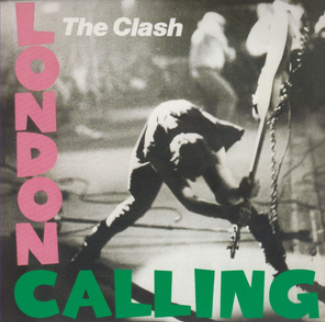
The Clash was also a band which approached social issues of injustice and oppression in their art.
ex: White Riots
This song encouraged disaffected white youths to riot like their black counterparts.
The ideology is anarchy, anti institutions
“Black man gotta lot a problems
White people go to school
But they don’t mind throwing a brick
Where they teach you how to be thick”
ex : English Civil War warned against the rise of the far righ mouvement in England.
The UK in the 1970s was marked by economic decline, high unemployment, and widespread dissatisfaction with the government. Many young people felt disenfranchised, and punk became a voice for the disillusioned youth. In the mid 70s, the political party National Front (neo fascist) began to rise.
ex : Guns of brixton
The Guns of Brixton” pre-dates the riots that took place in the 1980s in Brixton but the lyrics depict the feelings of discontent that were building due to heavy-handedness of the police that led to the riots, the recession and other problems at that time.
“When they kick at your front door
How you gonna come?
With your hands on your head
Or on the trigger of your gun?
When the law break in
How you gonna go?
Shot down on the pavement
Or waiting in death row?
…
They caught him with a gun
No need for the Black Maria
Goodbye to the Brixton sun”
The “Black Maria” lyric refers to the police, as it was the slang name for the police wagons of the time. This extract shows the fear among the population at the time.
Aesthetic Revolution
Punk was counter-cultural movement, against main stream society
It was also a lot about self expression, allowing each person to make a statement, political or otherwise, through their clothes. London became a hub for the “swinging sixties” fashion (which saw the birth of mini skirt).
70s Designers such as Vivienne Westwood and Malcolm McLaren played pivotal roles in shaping the early punk look, with their boutique, SEX, becoming a nucleus for punk clothing.
It’s where Pistols guitarist Steve Jones and friends hung out and where the band auditioned a green-haired outcast named John Lydon, better known to many as Johnny Rotten, as its lead singer.


She was influenced by leather-clad bikers and pinup girls of the 1950s, the bondage-heavy S&M subculture with its hardware and a DIY ingenuity – safety pins, zippers, haphazard hems – coupled with traditional fabrics like tartan. Before she turned to high end fashion and end her relationship with McLaren, Westwood actually shaped punk fashion.
As the lead singer of the Sex Pistols, Lydon became one of the most iconic figures in punk, known for his scathing lyrics and anti-authoritarian attitude.
ex : ANARCHY IN THE UK – 1977
“I am an Antichrist
I am an anarchist
Don’t know what I want but I know how to get it”
